
Prokaryotic Cell: Definition, Features, Structure, Examples
In 1957 Dougherty has divided cells into two types based on the organization in the nucleus of the cell. One is a prokaryotic cell (primitive cell) and the other is…

In 1957 Dougherty has divided cells into two types based on the organization in the nucleus of the cell. One is a prokaryotic cell (primitive cell) and the other is…
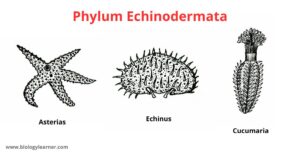
Phylum Echinodermata represents the most advanced invertebrate phylum closer to the chordates. They vary substantially in size which may range from 1 cm to about 2 m in length. In…

Phylum Mollusca is the second largest invertebrate phylum containing more than 90000 described living species after phylum Arthropoda. Johnston has first coined the name Mollusca in 1650. Although Aristotle was…

Bacteria are unicellular. Their structure is a very simple type. Bacteria are prokaryotes because they do not have a well-formed nucleus. A typical bacterial cell is structurally very similar to…
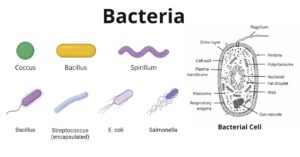
Bacteria are a type of simple, microscopic, unicellular organism. In 1675, Dutch scientist A. van Leeuwenhoek was first discovered bacteria. He proved the existence of bacteria in his own made…